


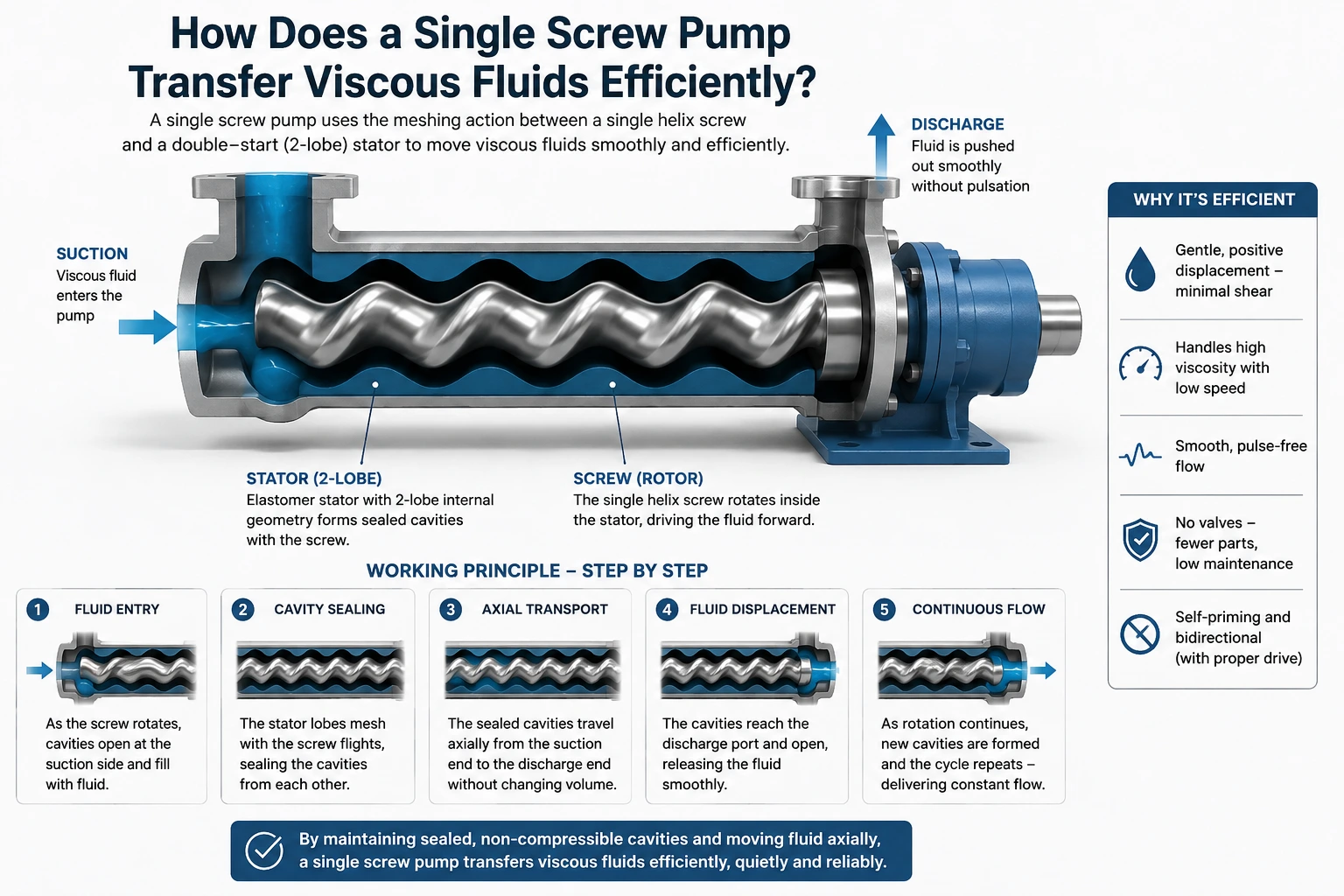
This blog explains how a single screw pump works and how it efficiently handles viscous fluid transfer across different industrial applications
Many industries handle thick, heavy fluids such as oils, sludge, pastes, and chemicals. These fluids are not easy to move with standard pumping systems, and they often cause issues such as uneven flow, clogging, and increased maintenance needs.
To handle this challenge, industries use the single screw pump, a reliable Industrial screw pump designed for smooth and continuous transfer of viscous fluids. It helps maintain steady flow even when the fluid is thick or sensitive.
Because of this stable performance,single screw pumps are widely used across different industries where consistent fluid movement is important. Understanding where they are used and how they work helps choose the right pumping solution for greater efficiency.
Where Are Single Screw Pumps Used?
Single screw pumps are widely used in industries where thick, heavy, or sensitive fluids need smooth and continuous transfer.
- Oil and gas industry: Mainly employed for heavy oil, crude transfer, and fuel handling, where a steady flow is required
- Chemical industry: Great choice for viscous and abrasive fluids that are moved in a controlled manner
- Food industry: Used for sauces, syrups, pastes, and other food-grade viscous products
- Wastewater industry: Handles sludge, slurry, and difficult waste materials efficiently
- Pharma industry: Supports hygienic and gentle transfer of sensitive liquids
What is a Single Screw Pump?
A single screw pump is a type of positive displacement pump designed to move thick and viscous fluids with a steady and controlled flow.
It works using a rotating screw (rotor) that moves inside a fixed rubber-lined part called a stator. As the rotor turns, it creates sealed spaces that push the fluid forward without mixing or breaking the flow.
This simple design helps the pump handle difficult fluids like oils, slurries, and pastes with ease. It is widely used as an Industrial screw pump because it offers smooth operation, even under tough working conditions.
Single Screw Pump Working Principle for Viscous Fluid Transfer
The single screw pump works on a simple but highly effective movement system designed for smooth fluid transfer.
- A rotor rotates inside a fixed stator to create movement
- Small sealed cavities are formed between the rotor and the stator
- These cavities carry the fluid from the suction side to the discharge side
- The fluid moves continuously without mixing or breaking the flow
- This design helps maintain steady pressure even for thick and non-uniform fluids
- It ensures efficient handling of viscous materials without blockage or pulsation
This simple mechanism is the reason why the single screw pump working principle for viscous fluid transfer is highly effective in industrial applications.
Key Parts of a Single Screw Pump for Industrial Maintenance Planning
Understanding the main parts of a single screw pump helps in better maintenance and long-term performance planning.
- Rotor – The rotating part that moves fluid through the pump
- Stator – Rubber-lined fixed component that forms sealed cavities with the rotor
- Drive shaft – Connects the motor and transfers rotational power to the rotor
- Sealing system – Prevents leakage and maintains internal pressure
- Suction and discharge ports – Allow smooth entry and exit of fluid
A proper single screw pump parts list for industrial maintenance planning helps industries reduce breakdowns, plan servicing, and improve pump life.
Advantages of Using a Single Screw Pump
Single screw pumps are preferred in many industries because they handle difficult fluids with steady and reliable performance.
- Handles high-viscosity fluids easily without losing flow stability
- Provides smooth and continuous transfer without pulsation
- Reduces chances of clogging during long operation cycles
- Works gently, making it suitable for sensitive and shear-sensitive fluids
- Supports continuous industrial use with stable output
- Improves overall system reliability in demanding conditions
These benefits make the Industrial screw pump a dependable choice for consistent fluid handling across different sectors.
Factors to Consider Before Selecting a Single Screw Pump
Choosing the correct pump is very important, as various sectors handle different fluids and operate under varying working conditions. Making a well-informed decision often means greater efficiency, less downtime, and longer pump lifespan.
- Fluid nature and viscosity level
Thick fluids like sludge, oil, and paste need a pump that can maintain steady flow without clogging or loss of pressure
- Required flow rate
The pump must match the system’s demand so that production remains smooth and consistent without overloading
- Pressure conditions in the system
Higher pressure applications need stronger sealing and a stable internal design for safe operation
- Material compatibility
Pump parts must be suitable for chemical, food-grade, or abrasive fluids depending on the industry
- Operating environment
Temperature, continuous usage, and working conditions directly affect pump performance and durability
Choosing the right configuration ensures better performance and supports selection from a reliable single screw pump manufacturer in India.
Choosing the Right Pump Partner Matters
Choosing the correct pump partner is equally crucial as choosing the pump itself. A worthy partner can contribute to confirming the right choice, guiding the installation procedure, and helping with operational efficiency for a long time under genuine industrial circumstances.
- Application understanding: A trustworthy partner examines the fluid type, viscosity, and process conditions before recommending a pump
- Correct pump selection support: Enables industries to prevent improper sizing or wrongly matched pump selection, which might cause poor performance
- Focus on long-term reliability: Make certain the operation of the pump is unchanged even under nonstop industrial usages
- Technical and service support: Assists during installation, troubleshooting, and maintenance to reduce downtime
- Industry-specific solutions: Offer pumps that are meant for industries like food, chemical oil, and wastewater handling
Working with experienced sanitary progressive cavity pump manufacturers for food industry and industrial pump experts helps improve system efficiency and operational stability. The only difference between single screw pumps and is that single screw pumps use one rotor to move fluid in a continuous cavity, while twin screw pumps use two intermeshing screws that work together to handle higher pressures and a wider range of fluid types more efficiently.
Single screw pumps are generally preferred for steady, low-pulsation transfer of highly viscous or shear-sensitive fluids, whereas twin screw pumps are better suited for applications requiring higher flow consistency, better self-priming capability, and handling of mixed-phase or varying viscosity media.
Reliable Solution for Industrial Viscous Fluid Transfer
Single screw pumps are very popular among industries that need to handle thick and difficult fluids in a smooth and well-controlled manner. Their simple design not only helps maintain a continuous flow but also minimizes interruptions and keeps performance stable during regular operations. Besides transferring viscous and non-uniform fluids smoothly and uninterruptedly, they also improve efficiency by providing a steady, controlled pumping action.
In addition to minimizing clogging and the frustration of stopping the operations, these pumps also help to reduce downtime indirectly. Reliable pumps that operate seamlessly in harsh environments are well-suited for continuous industrial use. If selected and installed properly, they will assist industries in operating processes efficiently and on an ongoing basis.
Delta PD Pumps provides reliable positive displacement pumping solutions for industrial applications. With strong expertise in screw pump technology, they support efficient, dependable fluid-handling systems for long-term operational performance.